

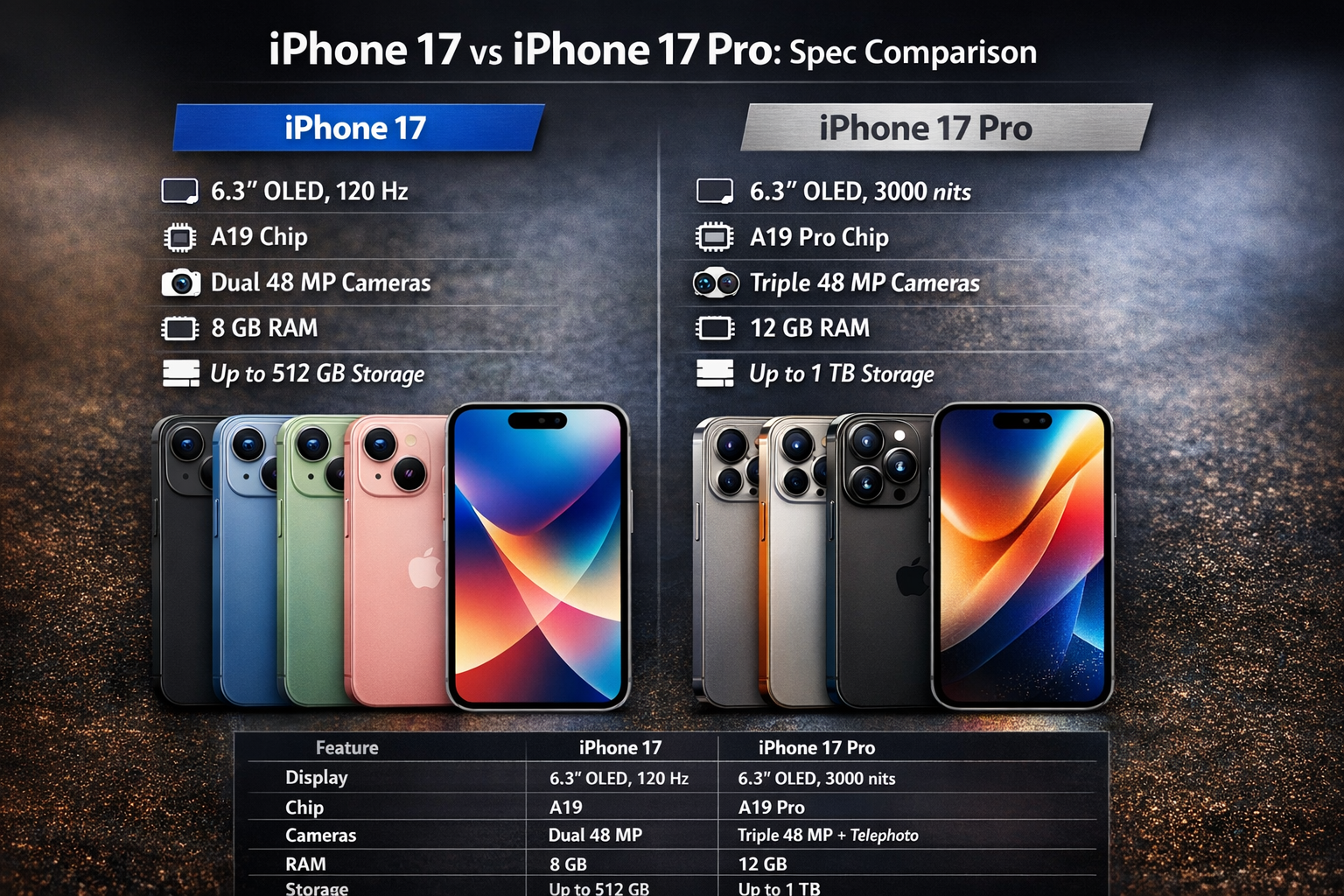
iPhone 17 vs iPhone 17 Pro: Detailed Comparison Review
The launch of the iPhone 17 series marks a significant shift in Apple’s strategy, particularly with the decision to finally bring ProMotion technology to the standard iPhone 17. This move has blurred the lines between the entry-level and pro-level devices, making the choice between the iPhone 17 and iPhone 17 Pro more nuanced than ever before. Both smartphones represent the pinnacle of Apple’s engineering, yet they cater to distinctly different types of users. The iPhone 17 is positioned as the versatile, all-rounder device for the masses, while the iPhone 17 Pro is engineered for creative professionals and power users who demand the absolute best in performance and photographic capability. Understanding these distinctions is crucial for making an informed purchasing decision in 2026.
Key Specifications at a Glance
| Specification | iPhone 17 | iPhone 17 Pro |
|---|---|---|
| Processor | A19 Chip | A19 Pro Chip with Vapor Cooling |
| RAM | 8 GB | 12 GB |
| Display | 6.3-inch OLED, 120Hz ProMotion | 6.3-inch OLED, 120Hz ProMotion, Always-On |
| Rear Camera System | Dual 48MP (Fusion + Ultra Wide) | Triple 48MP (Fusion + Ultra Wide + Telephoto) |
| Optical Zoom | 2x (in-sensor) | Up to 4x (periscope) |
| Front Camera | 18 MP with Center Stage | 18 MP with Center Stage |
| Battery Capacity | 3,692 mAh | 4,252 mAh |
| Video Playback | Up to 30 hours | Up to 33 hours |
| Charging & Data | USB-C 2.0 | USB-C 3.2 |
| Weight | 177 g | 206 g |
| Starting Price | $799 / £799 | $1,099 / £1,099 |
Design and Display
At first glance, the iPhone 17 and iPhone 17 Pro present two distinct design philosophies. The iPhone 17 retains a familiar, refined aesthetic, available in a palette of fresh colors like Mist Blue and Lavender, and is slightly lighter at 177 grams, making it comfortable for prolonged use. In contrast, the iPhone 17 Pro undergoes a more dramatic redesign, featuring a new aerospace-grade aluminum unibody with a distinctive rectangular camera housing that gives it a more industrial and robust look. It’s available in more subdued, professional tones such as Cosmic Orange and Deep Blue.
The display has been a historic differentiator, but for the iPhone 17 generation, that gap has nearly closed. Both models feature a stunning 6.3-inch Super Retina XDR OLED display with ProMotion technology, offering a 1-120Hz adaptive refresh rate for incredibly smooth scrolling and responsiveness. Both also boast the new Ceramic Shield 2 for improved scratch resistance and can reach a peak brightness of 3,000 nits for excellent outdoor visibility. The one remaining software differentiator is the Always-On display, which remains exclusive to the iPhone 17 Pro, allowing you to glance at the time, widgets, and notifications without waking the screen.
Performance and Software
Under the hood, the performance gap is defined by Apple’s latest silicon. The iPhone 17 is powered by the new A19 chip, which delivers exceptional energy efficiency and more than enough power for everyday tasks, from intensive multitasking to console-level gaming. It ensures a fluid and responsive experience for the vast majority of users.
The iPhone 17 Pro, however, takes a significant leap forward with the A19 Pro chip. This isn’t just a clock-speed bump; it includes a more powerful GPU and, crucially, an active cooling system using vapor chamber technology. This allows the Pro to sustain peak performance for much longer during demanding tasks like editing 8K video, playing graphics-intensive games, or running complex AI models locally. This is complemented by 12GB of RAM in the Pro versus 8GB in the standard model, ensuring better multitasking capabilities. Both devices ship with iOS 26 and support the full suite of Apple Intelligence features, though the Pro’s extra thermal headroom may allow for more sustained AI performance over time.
Camera System Comparison
The most substantial difference between the two models lies in their photographic capabilities. The iPhone 17 features a powerful dual-camera system with 48MP Fusion and 48MP Ultra Wide lenses. It captures stunning, high-detail images and offers a software-enabled 2x optical-quality zoom, which is perfectly adequate for everyday photography.
The iPhone 17 Pro, however, is in a different league entirely. Its triple 48MP camera system adds a dedicated 48MP Telephoto lens with a 4x optical zoom (and up to 8x optical-quality zoom), allowing you to get significantly closer to the action without losing detail. This system is designed for creative professionals, offering features like ProRAW, ProRes video recording, Apple Log 2 for greater color grading flexibility in post-production, and even support for recording directly to an external drive. While both phones take excellent photos, the Pro model offers the versatility and control that photography and videography enthusiasts will appreciate.
Battery Life and Charging
Reflecting their internal differences, the battery performance also varies. The iPhone 17 houses a 3,692 mAh battery, which Apple rates for up to 30 hours of video playback—enough to comfortably get most users through a full day. The iPhone 17 Pro benefits from a larger 4,252 mAh cell and the efficiency of the A19 Pro, extending video playback to up to 33 hours. In real-world usage, while both last a full day, the Pro model offers a bit more headroom for heavy users.
Charging capabilities present another clear distinction. While both support MagSafe and Qi2 wireless charging, the iPhone 17 Pro features faster USB-C 3.2 data transfer speeds, which is essential for professionals who frequently move large video and photo files to a computer. The standard iPhone 17 utilizes USB-C 2.0, which is perfectly fine for charging and regular data syncs but significantly slower for large file transfers.
Personal Experience with iPhone 17 and iPhone 17 Pro
I spent two weeks using both the iPhone 17 and iPhone 17 Pro as my daily drivers, swapping my SIM card between them every few days. Right away, the weight difference is tangible. The iPhone 17 feels almost featherlight compared to the Pro, and I found myself grabbing it more often for long reading sessions or when I was lying in bed. The Pro’s heft does convey a sense of durability and luxury, but it also becomes noticeable in a pocket over time.
In everyday tasks—social media, messaging, navigation, and light photography—both phones performed identically. The 120Hz display on the iPhone 17 is every bit as smooth as the Pro’s, and I never felt I was missing out on the Always‑On display. However, during a weekend trip, I put the cameras to the test. The iPhone 17 delivered beautiful, vibrant shots of landscapes and group photos. But when I tried to capture a distant lighthouse, the digital zoom on the iPhone 17 fell apart, while the Pro’s 4x optical zoom brought it crisply into frame. For video, the Pro’s Log recording gave me flexibility in color grading that I simply couldn’t replicate with the standard model. If you don’t zoom or color‑grade, you probably won’t notice the difference.
iPhone 17 Advantages and Disadvantages
Advantages of iPhone 17
- Exceptional Value: Brings the coveted 120Hz ProMotion display to a more accessible price point.
- Lighter and More Comfortable: At 177g, it’s noticeably lighter than the Pro, making it easier to hold for long periods.
- Excellent Camera System: The dual 48MP camera setup delivers fantastic photos and video for the vast majority of users.
- Great Battery Life: Provides reliable all-day battery life for typical usage patterns.
Disadvantages of iPhone 17
- No Dedicated Telephoto Lens: Lacks the optical zoom capabilities of the Pro for capturing distant subjects.
- Standard USB-C Speeds: USB-C 2.0 limits data transfer speeds compared to the Pro’s USB-C 3.2.
- Less Powerful for Sustained Workloads: The A19 chip and lack of active cooling may throttle under extreme, prolonged tasks like 8K video export.
- No Always-On Display: Lacks the convenience of the Pro’s always-on screen feature.
Advantages of iPhone 17 Pro
- Versatile Pro-Grade Triple Camera: The inclusion of a 48MP telephoto lens with 4x optical zoom is a game-changer for photography.
- Superior Sustained Performance: The A19 Pro chip and vapor chamber cooling handle intensive tasks without throttling.
- More RAM and Faster Data Transfers: 12GB of RAM and USB-C 3.2 support enable smoother multitasking and faster creative workflows.
- Premium, Distinctive Design: The new aluminum unibody and unique camera housing give it a standout, professional look.
Disadvantages of iPhone 17 Pro
- Significantly Higher Price: The $300/£300 premium is a substantial investment that may not be justifiable for all users.
- Heavier Build: At 206g, it is noticeably heavier, which some users might find less comfortable.
- Camera Bump Design: The new rectangular camera housing is a bold design choice that may not appeal to everyone’s aesthetic taste.
Who Should Buy Which Model?
You should buy the iPhone 17 if you are a student, a professional who uses their phone for communication, social media, and content consumption, or anyone upgrading from an older device. You want a phone that feels incredibly smooth and modern without paying a premium for specialized features you won’t use. It is the smart, balanced choice for the vast majority of people.
You should buy the iPhone 17 Pro if you are a photography enthusiast, a content creator who shoots and edits video on the go, or a mobile gamer who wants the best possible graphics and sustained performance. You need the versatility of optical zoom, the control of pro video formats, and the power to handle intensive creative apps. This phone is a tool for work and passion projects.
Things to Consider Before Buying
Before making your choice, consider how you will actually use your phone. If your daily routine consists of browsing, messaging, taking photos of friends and family, and streaming video, the iPhone 17 will feel every bit as premium and fast as the Pro, especially with its new 120Hz display.
However, if you find yourself frustrated by the limitations of digital zoom on your current phone, or if you regularly edit photos and videos, the iPhone 17 Pro’s camera system and faster data transfer are worthwhile investments. Also, think about longevity; the Pro’s extra RAM and superior cooling might make it more future-proof for demanding apps and software updates a few years down the line. Ultimately, the decision hinges on whether the Pro’s specialized capabilities are worth the significant price increase to you.
Summary
The iPhone 17 and iPhone 17 Pro both represent the pinnacle of smartphone design and performance. Apple has elevated the standard model to a point where it is no longer a compromise but a compelling, high-end device in its own right. The inclusion of ProMotion on the iPhone 17 is a game-changer, making it one of the best value propositions in the premium phone market.
The iPhone 17 Pro, however, justifies its higher cost by catering to a specific audience. It is a powerful tool for creators and tech enthusiasts who will actively utilize its advanced camera system, superior cooling, and faster connectivity. For the everyday user, the iPhone 17 is not just a good choice; it’s likely the smarter one, delivering a flagship experience without the professional price tag. Both phones are excellent, but they are excellent for different people.
Frequently Asked Questions (FAQ)
1. Is the display difference between the iPhone 17 and 17 Pro significant enough to notice?
For the vast majority of users, the difference will be negligible. Both phones feature the same 6.3-inch OLED panel with a 120Hz ProMotion refresh rate, meaning scrolling and animations will feel equally smooth. The only visual distinction is the Pro’s Always-On display, which allows you to see information at a glance without tapping the screen.
2. I’m not a professional photographer. Will I still notice a difference in photo quality between the two cameras?
In good lighting, both phones take stunning, detailed photos. You will only notice a major difference in specific scenarios: when you need to zoom in on a distant subject (where the Pro’s optical zoom excels) or if you plan to professionally color-grade your videos (using the Pro’s Apple Log 2). For standard portraits, landscapes, and everyday snapshots, the iPhone 17’s camera is exceptionally capable.